


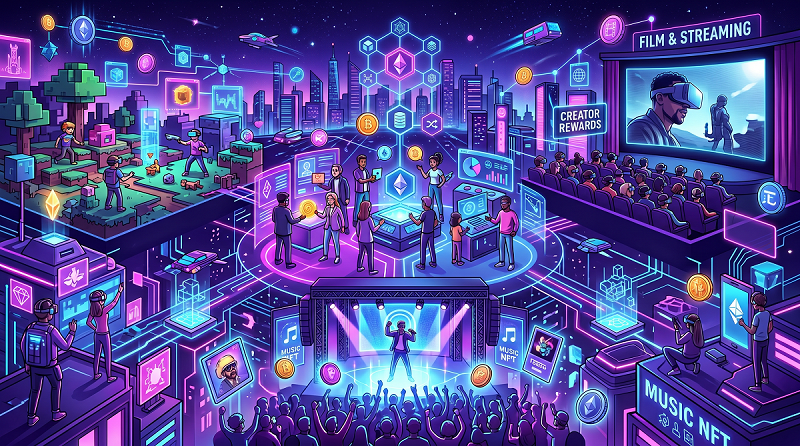
The global narrative of Web3, characterized by decentralization and permissionless cryptocurrencies, undergoes a profound transformation as it enters the Chinese market, giving rise to a distinct and highly controlled ecosystem. A comprehensive overview of the China Web3 In Entertainment Media industry reveals an environment where the core technologies of blockchain are enthusiastically embraced, but only within a state-sanctioned, permissioned framework. Unlike its Western counterparts, this industry explicitly decouples blockchain technology from speculative crypto trading. Instead, the focus is on leveraging distributed ledger technology (DLT) for practical applications such as intellectual property (IP) verification, creating non-fungible tokens (NFTs)—often rebranded as "digital collectibles"—and building the foundational layers of a national metaverse. This unique "Web3 with Chinese characteristics" is being spearheaded by the country's technology behemoths under the watchful eye of regulators. They are building proprietary, closed-loop systems that prioritize stability, traceability, and alignment with national strategic goals over the libertarian ideals of open decentralization. This approach has created a fascinating and insular market where innovation occurs at a rapid pace, but within carefully defined boundaries, shaping a future for digital entertainment that is fundamentally different from the rest of the world and centered on control and scalability.
At the heart of this burgeoning industry are China's established technology giants, who are strategically leveraging their vast ecosystems to dominate the Web3 entertainment space. Companies like Tencent, Alibaba, Bytedance, and Bilibili are not just participating; they are actively defining the market's structure and rules. Tencent, with its unparalleled dominance in gaming and social media through platforms like WeChat, has launched its digital collectible platform, Huanhe, and is aggressively exploring metaverse concepts within its gaming division. Similarly, Alibaba, the e-commerce titan, has established its own NFT marketplace, Jingtan (formerly AntChain Fan粒), leveraging its massive user base and payment infrastructure to sell digital collectibles related to art and culture. Bytedance, the parent company of TikTok (Douyin in China), is making significant investments in virtual reality hardware and metaverse-style social platforms, while Bilibili, the hub for China's youth culture, is empowering its creators with tools to issue their own digital assets. These companies are not building on public blockchains like Ethereum; they are deploying their own permissioned consortium chains. This allows them to control the network, manage user identities through real-name verification, and ensure all transactions are transparent to regulators, effectively creating walled gardens that extend their Web2 dominance into the new Web3 era.
The application of Web3 technologies is rapidly diversifying across various segments of China's massive entertainment and media landscape. In the gaming sector, the global "play-to-earn" model is being carefully adapted into a "play-for-fun" model with collectible digital assets, avoiding any direct financialization that could be construed as speculation. Game developers are integrating digital collectibles as rewards or purchasable cosmetics, enhancing player engagement and creating new revenue streams without crossing regulatory red lines. In the music industry, C-pop idols and record labels are releasing limited-edition digital collectibles that include exclusive audio clips, behind-the-scenes videos, or virtual concert tickets, fostering a deeper connection with their fan bases. The film and animation industries are exploring the use of blockchain to track IP rights and are issuing digital collectibles based on popular movie characters and scenes, creating a new form of digital merchandise. Furthermore, the rise of virtual idols—AI-powered digital avatars with massive followings—is a natural fit for Web3, with agencies issuing digital assets and creating exclusive virtual experiences for their fans, showcasing the practical and immediate commercial applications of these technologies within a controlled framework.
The entire industry operates under a unique and powerful regulatory framework that acts as both a catalyst and a constraint. On one hand, the Chinese government has been unequivocally hostile towards cryptocurrencies, banning initial coin offerings (ICOs), shutting down crypto exchanges, and prohibiting financial institutions from dealing in crypto assets. This has effectively severed the link between blockchain technology and its most prominent financial application. On the other hand, Beijing has been a vocal and powerful proponent of blockchain technology itself, elevating it to a national strategic priority. Initiatives like the Blockchain-based Service Network (BSN) aim to create a standardized, state-backed infrastructure for DLT applications. This dual approach creates a clear directive for the industry: innovate with blockchain, but do not touch crypto. This forces companies to focus on utility, such as supply chain management, government services, and, crucially for this market, IP protection and digital collectibles. The result is an industry that is simultaneously advanced in its technical application of blockchain for non-financial use cases and completely isolated from the global crypto-driven Web3 economy, a paradox that will continue to define its trajectory for the foreseeable future.
Explore More Like This in Our Regional Reports:
India Applied Ai In Cybersecurity Market

 English
 Arabic
 French
 Spanish
 Portuguese
 Turkish
 Dutch
Dutch
 Italiano
 Russian
 Romaian
 Portuguese (Brazil)
 Tiếng Việt