


With the sheer diversity of industries such as oil and gas, water treatment, and construction in an ever-evolving UAE economy, it’s important for any manufacturer and installer to effectively produce and install all components used to run these industries, and ball valves serve a very important function in controlling flow within these systems efficiently and effectively.
However, even though you have purchased the highest quality ball valve, if it’s not installed properly, your valve can fail prematurely.
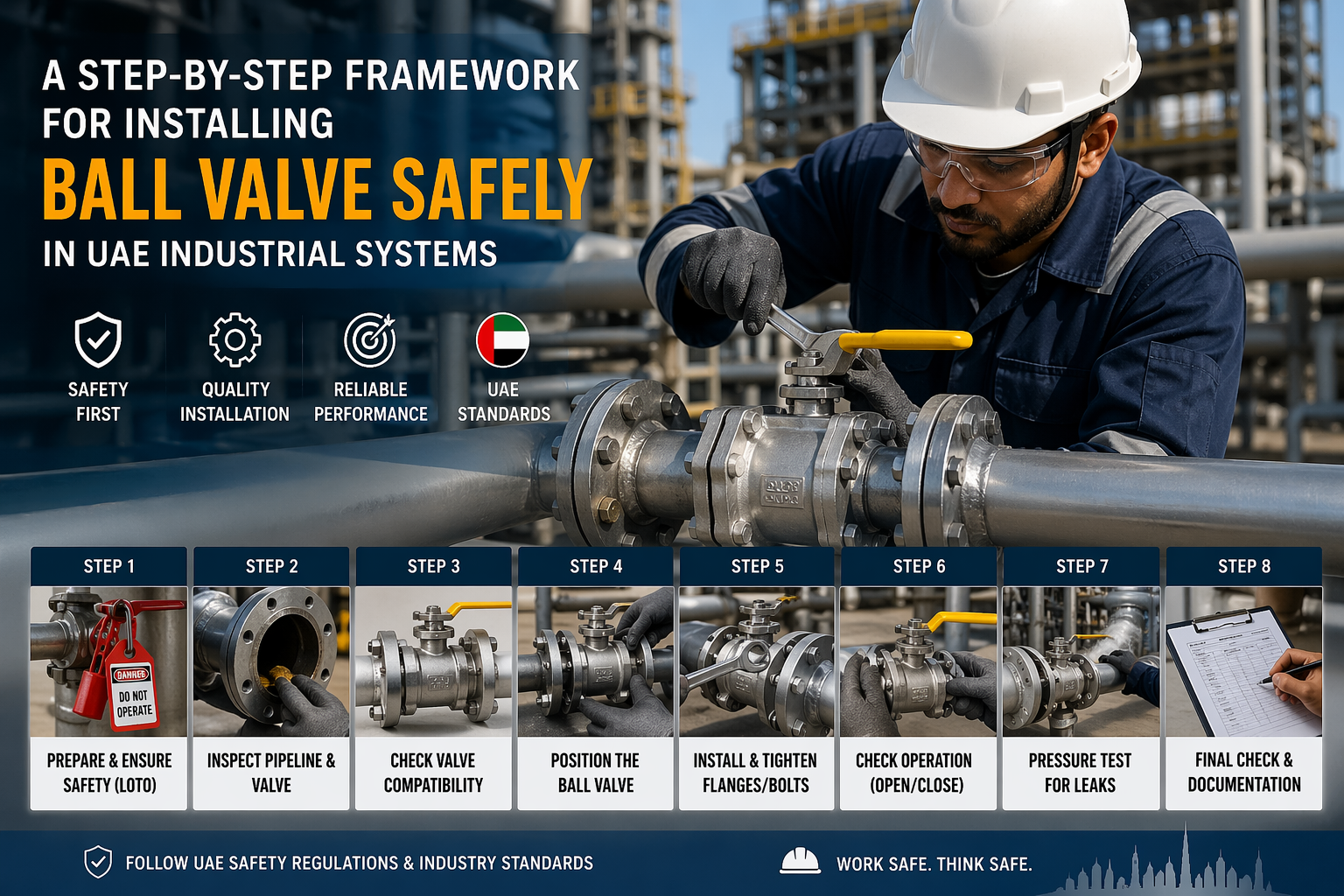
This article outlines a practical step-by-step framework to install a ball valve safely within UAE industries that operate in extreme conditions. This article is specifically written for engineers, technicians and facility managers. A good understanding of this step-by-step process will help you to reduce and eliminate your risk of damage, extend the life of your equipment and improve the safety of your operations.
The Importance of Proper Installation of a Ball Valve
Ideally, all ball valves are designed to provide excellent durability, a very tight seal when closed and a very effective method of shutting off the flow of fluid. If, however, a ball valve is installed incorrectly, it can result in significant problems, including but not limited to leaking, loss of pressure, shorter life expectancy and even safety hazards.
According to multiple industry sources, nearly 60% of valve failures are due to improper installation or maintenance. In the harsh UAE environment, even a very small installation issue can create huge amounts of lost production time and disruption to your operations.
First Step: Prior to Installation Assessing System Components is Necessary
Prior to installing ball valves, inspecting the equipment thoroughly will result in improved performance.
Things to Assess:
- Ensure that the ball valve meets the requirements of the systems (temperature, pressure, material).
- Check for damage during transport or storage.
- Check the internals of the valve for any contamination, i.e., sawdust, metal, dirt, etc., that may have been introduced prior to installing.
This is crucial to prevent any foreign material from entering into the system and affecting system performance before it starts.
Second Step: Preparation of the Pipe
Proper preparation of the pipeline is required to provide safe and effective installation of the ball valve.
Actions to Perform:
- Flush the pipeline of any dirt, sand or welding debris.
- Check that both the pipe and valve are lined up to prevent unnecessary stress on the ball valve.
- The ends of the pipes should be smooth and properly finished.
Cleaning the pipeline is especially important in the UAE due to the high amounts of dust and sand in the area.
Third Step: Properly Positioning the Ball Valve
Improperly positioned ball valves result in less functionality and increased effort for maintenance.
Best Practices:
- When installing the ball valve, it should initially be in the full open position to prevent damaging the seats of the valve.
- Ensure the handle or actuator is located for ease of access.
- Follow the manufacturer's instructions concerning flow direction.
Properly positioning the ball valve not only improves the performance of the system but also allows for easier servicing in the future.
Fourth Step: Secure the valve without over-tightening
Correctly applying the required amount of force when installing the valve is very important.
Here are some tips for installing properly:
Ensure that you use the right tools for your job and that you do not apply any force to the valve body.
Tighten all connections, including flanged connections, evenly to ensure that you do not cause any distortion.
Remember, over-tightening is one of the most common errors that can be made and will lead to damage to the seals and significantly reduce the lifespan of the valve.
Fifth Step: Perform pressure testing
Testing the valve after it has been installed will help to ensure that your system is functioning properly before placing it into full service.
There are two ways in which to test your valve:
Perform hydrostatic and/or pneumatic tests to identify the potential for detecting leaks at your joints and/or seals before you place your system into service.
Increase the pressure on the system until it reaches operating levels.
These testing procedures can reduce system failures by up to 40%' so they are an essential part of installing any valve.
Sixth Step: Establishing safety and maintenance procedures
While the installation process is the first step to successfully operating the valve, on-going maintenance is critical to achieving a good valve performance over time.
The following is a maintenance checklist that should be followed to properly maintain your valve:
- Conduct regular inspections of your valve.
- Look for leaks or changes in pressure.
- Service your valve as needed.
Preventive maintenance can reduce the risk of damage to a valve in the extreme hot and dry environment found in the UAE by combating any effects of heat and environmental wear.
Real-World Insight: A Costly Oversight
On One Industrial Facility In The UAE, a ball valve was fitted incorrectly, causing a leak to go unnoticed initially, which eventually resulted in the collapse of the pipeline, leading to over 24 hours of downtime and extensive repairs; the root cause was misalignment at the time of fitting, which showed how even a little oversight can lead to big issues.
Avoid These Common Mistakes When Installing Equipment:
- Not Checking That The Pipeline Has Been Cleaned Prior To Fitting
- Over-Tightening The Connection
- Not Conducting Pressure Tests Prior To Using Equipment
If You Make Sure You Don’t Make These Simple Mistakes, it will greatly improve the reliability and efficiency of your systems.
Final Outcome:
Properly installing a ball valve is not just another day at the office; it's a major component of improving performance and ensuring the safety and reliability of operations. Paying close attention during the installation process provides you with an opportunity to avoid costly repairs or replacements long-term by improving durability and performance for years down the line.
If your facility relies on ball valves, you should take the time now to assess and improve on your installation procedures. Review how you install ball valves; invest in training for your employees; and make sure that quality is first in every step of the installation process.
By taking these proactive measures today, you can safeguard against unanticipated breakdowns and keep operations running smoothly without interruption in the future.

 English
 Arabic
 French
 Spanish
 Portuguese
 Deutsch
 Turkish
 Dutch
Dutch
 Italiano
 Russian
 Romaian
 Tiếng Việt