


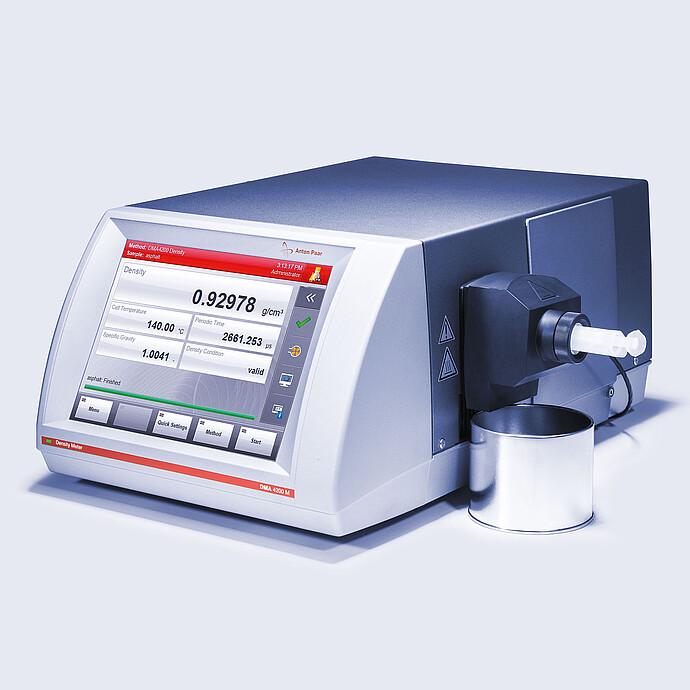
Critical Instrumentation for Quality Control and Process Optimization
In industries where precision and consistency are paramount, density measurement stands as a critical parameter for quality control, process optimization, and regulatory compliance. Density meters—sophisticated instruments that measure the density of liquids, gases, and slurries—are essential tools across a vast array of sectors, including oil and gas, chemicals, pharmaceuticals, food and beverage, and water treatment. The Density Meter Market is experiencing robust growth, driven by increasing automation in industrial processes, stringent quality and safety regulations, and the relentless pursuit of operational efficiency. This market encompasses a diverse range of technologies, from traditional hydrometers to advanced Coriolis, vibrating element, and nuclear density meters, each offering unique advantages for specific applications.
Market Overview and Introduction
The density meter market is a mature yet dynamic segment of the broader process instrumentation industry. Density measurement is fundamental to numerous industrial processes; it determines concentration, purity, and composition, serving as a key indicator of product quality and process efficiency. The market is characterized by a wide range of technologies, with Coriolis flow meters, which provide simultaneous mass flow and density measurement, representing a significant and growing segment. Other technologies include vibrating element densitometers, which offer high accuracy for liquids and gases; nuclear density meters, which provide non-invasive measurement for challenging applications; and digital hydrometers, which bring modern connectivity to traditional measurement principles. The market serves both in-line process applications, where real-time measurement is critical for control, and laboratory applications, where high-precision analysis is required for research and quality assurance.
Key Growth Drivers
Several powerful factors are driving the expansion of the density meter market. The increasing automation of industrial processes, particularly within the context of Industry 4.0 and the Industrial Internet of Things (IIoT), is a primary catalyst. Modern manufacturing facilities require real-time, continuous data to optimize operations, reduce waste, and ensure consistent product quality. Density meters that can integrate seamlessly into automated control systems are in high demand. Another critical driver is the stringent regulatory environment across key industries. In pharmaceuticals, regulatory bodies like the FDA mandate precise measurement and documentation of product quality parameters, including density, throughout the manufacturing process. In the food and beverage industry, density measurement is essential for ensuring product consistency and meeting labeling requirements. The oil and gas industry also represents a major market driver, where density measurement is critical for custody transfer, pipeline monitoring, and refinery process control.
Consumer Behavior and E-commerce Influence
While density meters are industrial instruments not directly purchased by consumers, consumer behavior and the growth of e-commerce exert a significant indirect influence on the market. The consumer demand for high-quality, consistent products—from bottled beverages to pharmaceutical drugs—drives manufacturers to invest in precise quality control instrumentation. When a consumer purchases a bottle of olive oil or a soft drink, the consistency of that product across batches is ensured in part by density measurement during production. Moreover, the explosive growth of e-commerce has transformed supply chains, creating increased demand for logistics and warehousing solutions where density measurement plays a role in inventory management and quality verification. The trend toward direct-to-consumer brands and smaller-batch artisanal production is also creating new opportunities for more accessible, user-friendly density measurement devices suitable for smaller-scale operations.
Regional Insights and Preferences
The density meter market exhibits distinct regional characteristics shaped by industrial composition, economic development, and regulatory frameworks. North America holds a significant share of the market, driven by a mature pharmaceutical industry, advanced oil and gas sector, and strong focus on automation in manufacturing. The region's emphasis on regulatory compliance and quality assurance fuels continuous investment in precision measurement instrumentation. Europe represents another major market, with strong demand from the chemical, pharmaceutical, and food and beverage industries. The region's stringent environmental and safety regulations drive adoption of advanced density measurement technologies, particularly for emissions monitoring and process safety. Asia-Pacific is the fastest-growing region, propelled by rapid industrialization, expansion of manufacturing capabilities, and increasing investment in quality control infrastructure. Countries like China, India, Japan, and South Korea are witnessing significant growth in their chemical, pharmaceutical, and food processing sectors, driving substantial demand for density meters.
Technological Innovations and Emerging Trends
The density meter market is characterized by continuous technological innovation aimed at improving accuracy, reliability, and ease of use. One of the most significant trends is the integration of digital connectivity and IIoT capabilities. Modern density meters increasingly feature built-in digital communication protocols such as HART, Modbus, and Profibus, enabling seamless integration into industrial networks. This connectivity allows for remote monitoring, predictive maintenance, and data analytics, aligning with the broader Industry 4.0 movement. Another key trend is the development of non-invasive and clamp-on density measurement technologies. These solutions offer significant advantages for applications where process intrusion is undesirable or where traditional insertion meters are impractical due to sanitary concerns or high-maintenance costs. Additionally, there is a growing trend toward miniaturization and portable density meters, driven by the need for on-site testing in field applications, including environmental monitoring, fuel quality verification, and beverage production.
Sustainability and Eco-friendly Practices
Sustainability is becoming an increasingly important factor in the density meter market. Density measurement plays a critical role in waste reduction and resource efficiency. By enabling precise control of blending, mixing, and separation processes, density meters help manufacturers minimize raw material waste, reduce energy consumption, and optimize yield. In the water and wastewater treatment sector, density meters are essential for monitoring sludge concentration and optimizing treatment processes, contributing to water conservation efforts. Furthermore, the development of more energy-efficient density meter designs and the use of environmentally friendly materials in instrument construction align with broader sustainability goals. Manufacturers that can demonstrate the environmental benefits of their products—such as reduced waste, lower energy consumption, and longer operational life—are gaining a competitive advantage in markets where sustainability is a priority.
Challenges, Competition, and Risks
Despite its positive growth trajectory, the density meter market faces several challenges. The high cost of advanced density meters, particularly Coriolis and nuclear instruments, can be a barrier for smaller enterprises or price-sensitive markets. This creates opportunities for lower-cost alternatives but also poses a risk of compromising measurement accuracy. Intense competition from a large number of established players and emerging regional manufacturers puts pressure on pricing and margins. The market is also facing technological disruption from alternative measurement technologies, such as near-infrared (NIR) spectroscopy, which can provide compositional analysis beyond simple density measurement. Additionally, supply chain disruptions and the availability of specialized materials and components can impact manufacturing lead times and costs. The handling and disposal of nuclear density meters, which contain radioactive sources, also present regulatory and safety challenges that require specialized expertise.
Future Outlook and Investment Opportunities
The future outlook for the density meter market is highly positive, with sustained growth projected across all regions and technology segments. The continued advancement of digital connectivity will see density meters becoming increasingly intelligent, with embedded analytics and self-diagnostic capabilities. The expansion of edge computing will enable more processing of density data at the point of measurement, reducing latency and enabling faster process adjustments. Investment opportunities are most promising in companies that are leading innovation in digital density measurement solutions, those developing non-invasive and clamp-on technologies, and manufacturers that can offer integrated systems combining density measurement with other process parameters such as viscosity and temperature. The growing demand for portable and handheld density meters for field applications also represents a significant growth segment. As industries continue to pursue automation, quality, and efficiency, the density meter market is poised for sustained expansion.
Conclusion
The density meter market is a vital component of the global process instrumentation landscape, enabling precise measurement and control across a diverse range of industries. Driven by industrial automation, regulatory compliance, and the pursuit of operational efficiency, the market continues to evolve with technological innovations that enhance accuracy, connectivity, and ease of use. While challenges such as high costs and intense competition persist, the long-term outlook remains positive. As industries embrace digital transformation and sustainability, density meters will play an increasingly critical role in ensuring product quality, optimizing resource utilization, and enabling the smart factories of the future.
➤➤Explore Market Research Future- Related Ongoing Coverage In Semiconductor Industry:

 English
 Arabic
 French
 Spanish
 Portuguese
 Turkish
 Dutch
Dutch
 Italiano
 Russian
 Romaian
 Portuguese (Brazil)
 Tiếng Việt