


If you dismiss a domestic worker without following a fair process, you are likely to lose at the Commission for Conciliation, Mediation and Arbitration (CCMA)—even if the employee was clearly in the wrong.
Fairness in procedure matters just as much as the reason for dismissal.
This is where IR services become essential. They provide structure, consistency, and legal protection when dealing with discipline, misconduct, and termination.
Without proper labour law procedures, domestic employers expose themselves to unnecessary risk.
What IR Services Actually Do for Domestic Employers
Industrial Relations (IR) services focus on managing the relationship between employer and employee in a way that aligns with South African labour law.
In a domestic environment, this becomes even more important because decisions are often made informally. Emotions can influence outcomes, and there is rarely a structured HR system in place.
IR services bring:
-
Process – ensuring every action follows a fair and defensible procedure
-
Documentation – creating records that support your decisions
-
Consistency – applying rules equally across all situations
-
Compliance – aligning your actions with legal expectations
From my experience, employers don’t lose disputes because they acted unfairly. They lose because they cannot prove they followed the correct process.
Understanding Fairness: Substantive vs Procedural
South African labour law requires two types of fairness in any dismissal:
-
Substantive fairness relates to the reason for dismissal. Was there a valid reason, such as misconduct, poor performance, or operational requirements?
-
Procedural fairness relates to how the dismissal was handled. Was the employee given a chance to respond? Was the process consistent and documented?
You can have a valid reason to dismiss an employee and still lose a case if the procedure was flawed.
According to the Labour Relations Act, both elements must be present for a dismissal to be considered fair.
The Fair Disciplinary Process Explained
A structured disciplinary process protects both the employer and the employee. It ensures decisions are based on facts rather than emotion.
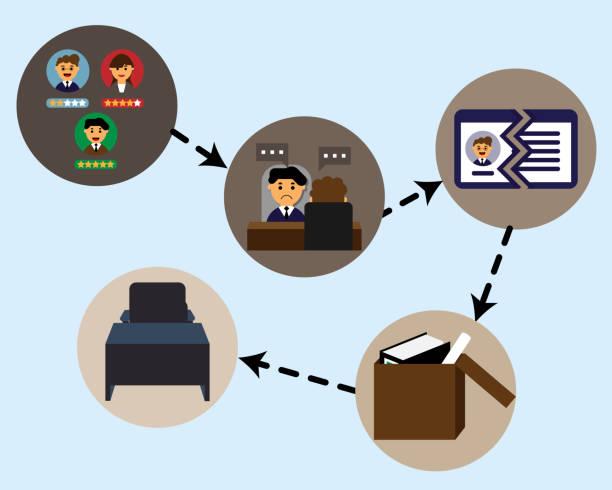
The typical process includes:
-
Investigation – gathering facts before taking action
-
Notification – informing the employee of the issue in writing
-
Disciplinary hearing – giving the employee a chance to respond
-
Outcome decision – applying a fair and consistent sanction
-
Record keeping – documenting every step
This process may seem formal for a household, but it is essential for CCMA compliance.
Disciplinary Hearings: Why They Matter
A disciplinary hearing is not about punishment. It is about fairness.
The employee must be informed of the allegations and given an opportunity to explain their side. This is a legal requirement, not a formality.
In many cases I’ve handled, employers skipped this step because they felt the issue was obvious. That decision alone often led to an unfair dismissal ruling.
A properly conducted hearing demonstrates that:
-
The employer acted reasonably
-
The employee was treated fairly
-
The outcome was not predetermined
Using Employee Warnings Correctly
Warnings are a critical part of progressive discipline. They show that the employee was given an opportunity to improve before stronger action was taken.
However, warnings must be used correctly to be effective.
-
Verbal warnings should be recorded
-
Written warnings must clearly state the issue and expected improvement
-
Final warnings should indicate that dismissal may follow if behaviour continues
Without a history of warnings, dismissal for minor misconduct becomes difficult to justify.
The Fair Dismissal Process in Practice
Dismissal should always be the last resort.
A fair dismissal process includes:
-
A valid reason supported by evidence
-
A fair disciplinary hearing
-
Consideration of alternatives to dismissal
-
Consistency with previous cases
-
Proper documentation of the entire process
Employers often make the mistake of jumping straight to dismissal without building a case. This weakens their position significantly.
Case Study: When Process Protects the Employer
Challenge
A domestic worker was repeatedly absent without notice. The employer dismissed her immediately after a third incident without following a formal process.
Action
We reconstructed the disciplinary process, issuing warnings for each incident and conducting a formal disciplinary hearing before any further action was taken.
Result
When the matter escalated, the employer was able to demonstrate a clear, fair process. The case was resolved without financial penalty.
Key insight: The outcome was not based on the misconduct alone, but on the process followed to address it. - https://labourguide.co.za/misconduct/procedural-fairness
Pro Tip: Documentation Wins Cases
Here’s something most employers overlook:
At the CCMA, documentation carries more weight than verbal explanations.
You may remember every detail of what happened. But if it’s not written down, it becomes difficult to prove.
Even simple records—warnings, meeting notes, attendance logs—can determine the outcome of a dispute.
Common Mistakes Domestic Employers Make
The same issues appear repeatedly in disciplinary and dismissal cases:
-
Acting emotionally instead of following a structured process
-
Skipping disciplinary hearings because the outcome seems obvious
-
Failing to issue or document employee warnings
-
Applying rules inconsistently
-
Not keeping proper records
Avoiding these mistakes significantly improves your position in any labour dispute.
Building a Simple IR Framework at Home
You don’t need a corporate HR department to manage discipline correctly. You need a simple, consistent framework.
This includes:
-
A clear disciplinary procedure
-
Defined rules and expectations
-
A structured warning system
-
Basic documentation practices
-
A fair hearing process
Once this framework is in place, managing misconduct becomes predictable and defensible.
Why IR Services Are Worth It
Managing discipline and dismissals without professional support is risky.
IR services ensure:
-
Compliance with labour law procedures
-
Proper handling of disciplinary hearings
-
Fair and defensible dismissal processes
-
Reduced risk of CCMA disputes
-
Confidence in decision-making
In my experience, employers who invest in IR support early avoid far greater costs later.
Key Takeaways
-
Fair process matters as much as the reason for dismissal
-
Disciplinary hearings are a legal requirement, not optional
-
Employee warnings build the foundation for fair dismissal
-
Documentation is your strongest protection in disputes
-
IR services provide structure, consistency, and compliance
People Also Ask (FAQ)
What is a fair dismissal process in South Africa?
A fair dismissal process requires both a valid reason and a fair procedure, including a disciplinary hearing and proper documentation, in line with the Labour Relations Act.
Are disciplinary hearings required for domestic workers?
Yes. Even in a domestic setting, employees must be given an opportunity to respond before any disciplinary action or dismissal is finalised.

 English
 Arabic
 French
 Spanish
 Portuguese
 Deutsch
 Turkish
 Dutch
Dutch
 Italiano
 Russian
 Romaian
 Portuguese (Brazil)