


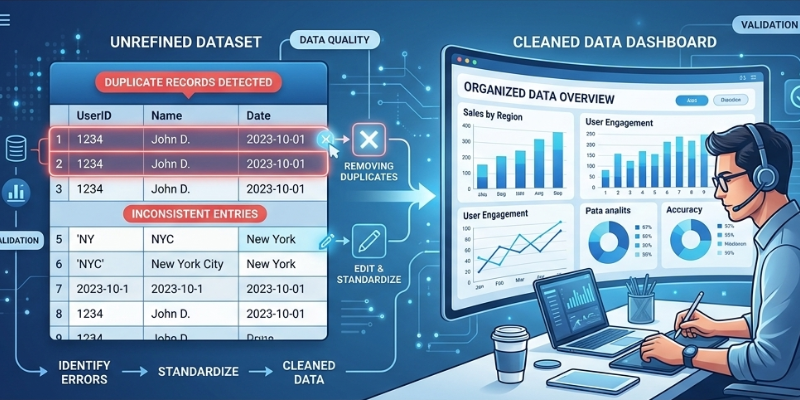
Data quality is a critical factor in any data analysis project. When datasets contain duplicate entries or inconsistent records, the results of analysis can become misleading. Analysts depend on clean and reliable data to identify patterns, make predictions, and support decision making. Without proper data preparation, even advanced analytical methods can produce incorrect conclusions.
Duplicates and inconsistencies usually appear when data is collected from multiple sources, entered manually, or transferred across systems. These issues can lead to incorrect counts, conflicting information, and unreliable reports. Identifying and tackling these problems is a crucial skill for anyone engaged with data. If you want to build strong skills in data preparation and analysis, you can consider enrolling in Data Analytics Courses in Bangalore at FITA Academy to gain practical experience with real world datasets.
Understanding Duplicate Records
Duplicate records occur when the same data appears more than once in a dataset. This may happen when systems merge information from different databases or when the same transaction is recorded multiple times. For example, a customer database may contain multiple entries for the same person with slightly different spellings or contact details.
These duplicates can create confusion during analysis. If a customer appears three times in a dataset, reports may incorrectly count them as three different customers. This problem can affect sales analysis, marketing insights, and operational planning.
To manage duplicates effectively, analysts first identify records that share similar fields such as email addresses, phone numbers, or identification numbers. Once these duplicates are detected, the next step is to decide which record should be kept and which ones should be removed or merged.
Identifying Inconsistent Records
Inconsistent records refer to data entries that represent the same type of information but appear in different formats or values. For example, a country name might appear as India, INDIA, or IND in different records. Similarly, dates might be stored in multiple formats such as 10-01-2026 or 01/10/2026.
These inconsistencies make it difficult to analyze data accurately. When categories or values are not standardized, data grouping and comparisons become unreliable. Analysts must review the dataset and identify variations that represent the same meaning.
Standardizing these records improves the quality of the dataset. Analysts often create rules for formatting values, correcting spelling variations, and aligning units of measurement. If you want to gain practical knowledge on managing such data issues, you may consider taking a Data Analytics Course in Hyderabad to learn structured techniques used in real industry projects.
Methods to Remove Duplicates
There are several methods analysts use to remove duplicate records. The most common approach involves identifying unique identifiers such as customer IDs, transaction numbers, or email addresses. These identifiers help detect repeated entries in a dataset.
Another method is record matching. Analysts compare multiple fields like name, phone number, and address to identify possible duplicates that are not exact copies. Once these records are detected, analysts merge relevant information and keep only one accurate version of the record.
Maintaining clear data entry rules also helps prevent duplicates in the future. Organizations often use validation systems that check existing records before allowing new entries. This proactive approach reduces errors and keeps the dataset more reliable.
Best Practices for Maintaining Data Consistency
Maintaining consistent data requires clear standards and regular monitoring. Organizations should define standard formats for names, dates, addresses, and other common fields. When everyone follows the same format, datasets remain easier to analyze.
Another useful practice is automated validation. Systems can check incoming data for missing fields, incorrect formats, or duplicate values before storing it in the database. Regular data audits also help identify issues early and maintain overall data quality.
Documentation also plays an important role. When teams understand how data should be entered and managed, they can follow consistent processes that prevent errors.
Removing duplicates and fixing inconsistent records are essential steps in preparing data for analysis. Clean datasets lead to more accurate insights, better decision making, and stronger business strategies. Analysts who understand these data preparation techniques can significantly improve the reliability of their analytical work.
Developing these skills requires both conceptual knowledge and hands-on practice with datasets. If you want to strengthen your expertise in data cleaning and analytical methods, you can consider taking a Data Analytics Course in Ahmedabad to build practical skills that support a career in data analytics.
Also check: Building Strong Fundamentals in Data Analytics Before Tools

 English
 Arabic
 French
 Spanish
 Portuguese
 Deutsch
 Turkish
 Dutch
Dutch
 Italiano
 Russian
 Romaian
 Portuguese (Brazil)