


Introduction to Derivatives Pricing Options
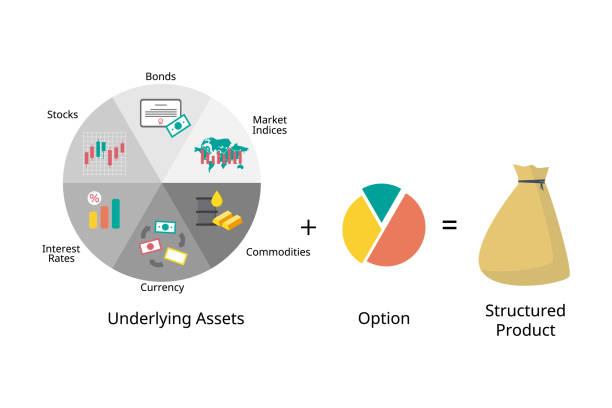
In the world of finance, derivatives pricing options are a critical tool for investors, traders, and institutions seeking to manage risk or enhance returns. Derivatives, broadly speaking, are financial contracts whose value derives from an underlying asset such as stocks, bonds, commodities, or interest rates. Among derivatives, options are particularly popular because they provide the right, but not the obligation, to buy or sell an asset at a predetermined price within a set period.
Understanding how these options are priced is essential for making informed trading decisions and managing financial exposure. Pricing options involves complex mathematical models, market data, and an understanding of how risk factors influence value. While this may seem intimidating, a step-by-step exploration can make the topic approachable for both general readers and academic audiences alike.
Key Concepts in Options Pricing
Intrinsic Value and Time Value
At the most fundamental level, an option’s price—or premium—is determined by its intrinsic value and time value. Intrinsic value is straightforward: it reflects the difference between the current price of the underlying asset and the option’s strike price, provided it is favorable to the option holder. If the option has no favorable value at the moment, its intrinsic value is zero.
Time value, on the other hand, accounts for the potential of the option gaining value before expiration. Factors influencing time value include volatility, the duration until expiration, and prevailing interest rates. The combination of intrinsic value and time value forms the total premium that buyers are willing to pay for an option.
The Role of Volatility
Volatility plays a central role in options pricing. In simple terms, volatility measures the degree to which an asset’s price fluctuates over time. Higher volatility increases the probability that the option will become profitable before expiration, raising its value. Implied volatility, derived from market prices of options, provides a forward-looking measure that traders often use to gauge market sentiment and potential price swings.
Interest Rates and Dividends
Interest rates affect options pricing, particularly for longer-term contracts. Higher risk-free rates generally increase call option values while reducing put option values, reflecting the opportunity cost of capital. Similarly, expected dividends impact option pricing because dividends reduce the price of the underlying asset. Accurate modeling of these factors is crucial for precise valuations.
Popular Models for Pricing Options
The Black-Scholes Model
The Black-Scholes model, developed in 1973 by Fischer Black, Myron Scholes, and Robert Merton, remains one of the most influential frameworks for options pricing. The model calculates the theoretical price of European-style options using inputs such as the current asset price, strike price, time to expiration, risk-free interest rate, and volatility.
One strength of the Black-Scholes model is its analytical clarity, allowing traders to quickly estimate option premiums. However, it assumes continuous trading and constant volatility, which may not always reflect real-world markets. Despite these limitations, the model is a foundational tool in both academic research and practical trading strategies.
Binomial and Trinomial Models
For more flexibility, binomial and trinomial models offer a stepwise approach to option pricing. These models simulate the potential future movements of the underlying asset over discrete time intervals, capturing a wider range of possible outcomes than continuous models like Black-Scholes.
The binomial model is particularly popular because it can handle American-style options, which allow early exercise, unlike European options. Trinomial models enhance accuracy by considering three possible price movements at each step, although at the cost of greater computational complexity.
Monte Carlo Simulations
Monte Carlo simulations represent another advanced approach for pricing complex derivatives, including exotic options with path-dependent features. This method relies on generating thousands or millions of potential price paths for the underlying asset and calculating the average payoff. While computationally intensive, Monte Carlo simulations provide flexibility for modeling scenarios that other analytical models cannot easily handle.
Practical Applications of Options Pricing
Risk Management
Options are frequently used to hedge risk. For example, a company with significant exposure to oil prices may purchase put options to protect against a sudden decline in commodity prices. Correctly pricing these options ensures that the hedge provides adequate protection without unnecessary cost.
Speculation and Trading Strategies
Options also offer opportunities for speculative trading. Traders can implement strategies such as spreads, straddles, and strangles, which rely on precise pricing assumptions to profit from market movements. Understanding the pricing mechanics allows traders to identify mispriced options and exploit inefficiencies in the market.
Portfolio Optimization
Institutional investors often integrate options into portfolio management to enhance returns or reduce volatility. For instance, writing covered calls on existing stock positions can generate additional income, while protective puts can limit downside risk. The effectiveness of these strategies depends heavily on accurate options pricing, highlighting the importance of understanding underlying models and market conditions.
For more detailed guidance, you can explore our derivatives pricing options help to understand practical implementation strategies in real-world trading scenarios.
Challenges and Considerations in Options Pricing
Market Assumptions and Limitations
While models like Black-Scholes provide a theoretical foundation, real markets often deviate from ideal assumptions. Asset prices can exhibit sudden jumps, volatility may change rapidly, and liquidity constraints can affect trade execution. Traders must recognize these limitations and adjust their pricing and risk management strategies accordingly.
The Impact of Behavioral Factors
Investor psychology can also influence option prices. Market sentiment, overreaction to news, and herd behavior can create discrepancies between theoretical and observed prices. While quantitative models provide a rational framework, understanding behavioral factors adds an additional layer of insight for practitioners.
Regulatory and Operational Considerations
Regulatory frameworks, margin requirements, and operational factors can further influence options pricing. For example, differences in taxation or exchange rules may affect the cost and payoff of certain options, underscoring the need for a holistic view when applying pricing models in practice.
Future Trends in Options Pricing
As financial markets evolve, options pricing continues to adapt. Advances in computational power, machine learning, and artificial intelligence are enhancing the accuracy of pricing models and risk assessment. Algorithms can now process vast datasets in real time, capturing subtle market signals and adjusting valuations dynamically.
Sustainability and climate-related derivatives are also emerging, creating new challenges for pricing models. These instruments often rely on non-traditional data sources, such as weather patterns or carbon emissions, requiring innovative approaches to valuation.
Conclusion
Derivatives pricing options represent a complex yet essential area of finance, bridging theory and practical application. From understanding intrinsic and time values to applying sophisticated models like Black-Scholes or Monte Carlo simulations, accurate pricing is fundamental for risk management, speculation, and portfolio optimization.

 English
 Arabic
 French
 Portuguese
 Deutsch
 Turkish
 Dutch
Dutch
 Italiano
 Russian
 Romaian
 Portuguese (Brazil)
 Tiếng Việt