


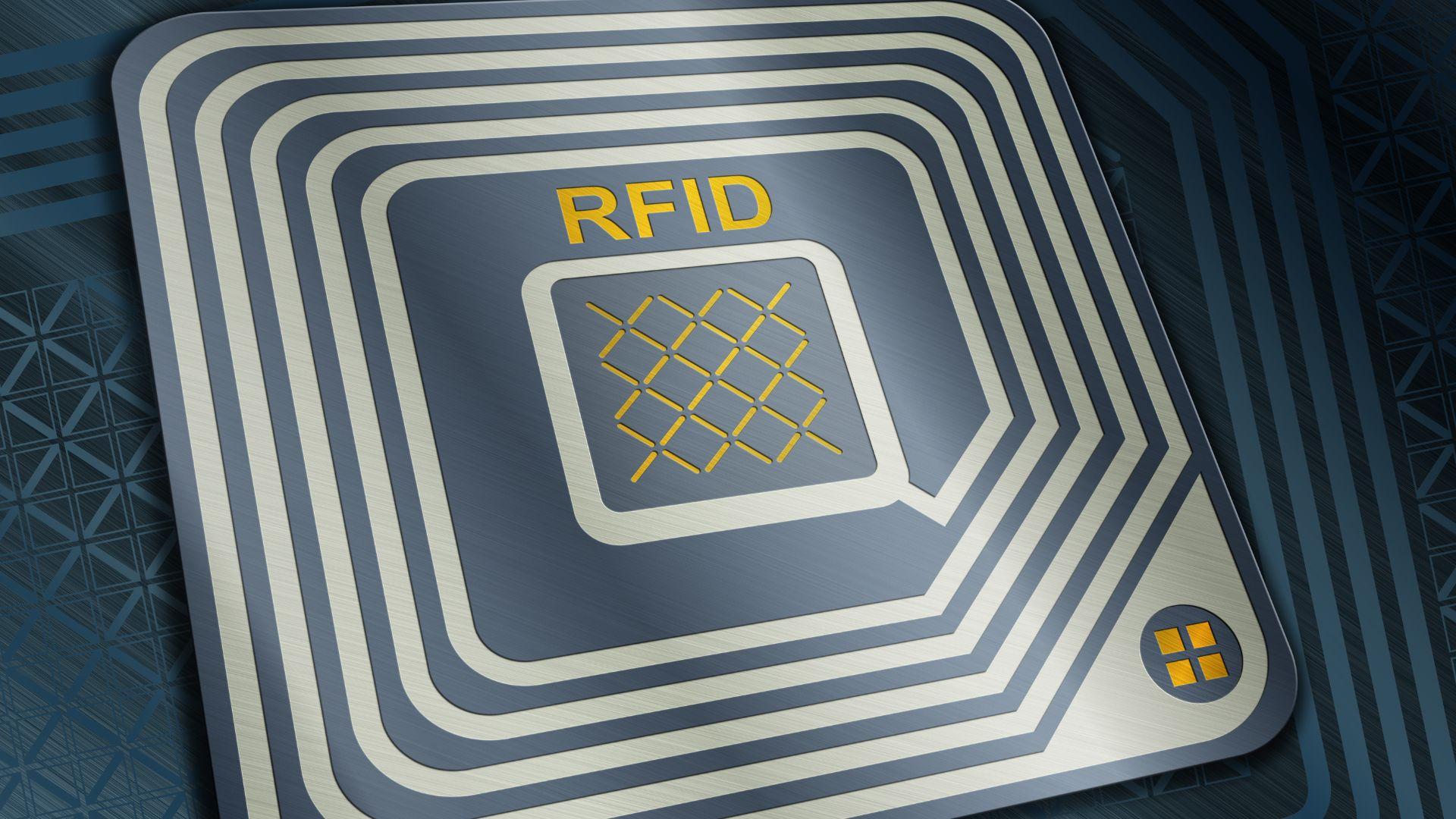
RFID Market Size and Forecast 2026–2034: Real-Time Visibility Reshaping Global Operations
The RFID Market is projected to expand from US$ 17.32 billion in 2025 to US$ 43.31 billion by 2034, registering a strong CAGR of 10.72% during 2026–2034. Rising automation in retail, logistics, healthcare, and manufacturing is significantly boosting adoption. Additionally, declining tag costs, increasing need for real-time asset visibility, and integration with IoT and cloud platforms are accelerating deployment worldwide.
As enterprises seek higher accuracy, operational efficiency, and contactless processes, RFID technology is becoming a cornerstone of digital transformation strategies.
RFID Industry Overview
Radio Frequency Identification (RFID) is a wireless identification technology that uses radio waves to capture and transmit data from tagged objects without requiring line-of-sight scanning. A standard RFID system consists of:
-
RFID tags (containing embedded chips and antennas)
-
RFID readers
-
Middleware and analytics software
Unlike barcodes, RFID enables bulk scanning and automatic data capture, improving speed and accuracy across operations.
RFID supports multiple frequency bands and read ranges, making it suitable for:
-
Inventory management
-
Asset tracking
-
Supply chain monitoring
-
Access control and authentication
-
Anti-counterfeiting
Industries including retail, logistics, healthcare, manufacturing, and government increasingly rely on RFID to reduce errors, automate workflows, and gain actionable insights.
Growth Drivers for the RFID Market
1. Overhead RFID Infrastructure & Retail Automation
Retail modernization is one of the strongest growth drivers. The shift toward omnichannel retail and real-time inventory accuracy is prompting large-scale RFID investments.
In January 2025, SML IIS and Zebra Technologies introduced a ceiling-mounted RFID reader solution to enhance read accuracy and reduce store-floor congestion. Overhead systems enable continuous monitoring, eliminate blind spots, and support frictionless retail environments.
Retailers deploying RFID benefit from:
-
Accurate cycle counts
-
Reduced shrinkage
-
Improved stock visibility
-
Seamless Buy-Online-Pick-Up-In-Store (BOPIS) operations
As physical stores integrate with digital commerce platforms, high-performance RFID systems are becoming mission-critical infrastructure.
2. Expansion in Commercial Security & Access Control
RFID is increasingly embedded in access control and secure identification ecosystems. In January 2025, ASSA ABLOY acquired 3millID and Third Millennium for USD 21 million to expand its RFID-based authentication portfolio.
Growing demand for:
-
Contactless credentials
-
Hybrid workplace access solutions
-
Biometric integration
-
Cloud-based identity management
is driving adoption across corporate offices, smart buildings, and critical infrastructure.
RFID integration with mobile credentials and enterprise security platforms strengthens authentication, enhances safety compliance, and streamlines identity verification processes.
3. Strategic Technology Partnerships & Product Innovation
Collaboration between RFID hardware and semiconductor innovators is accelerating product development.
In January 2024, Newland AIDC partnered with Impinj Inc. to integrate advanced RAIN RFID technology into its devices. Such partnerships improve tag sensitivity, extend read ranges, and reduce energy consumption.
As companies pursue digital transformation, demand for:
-
Item-level tracking
-
Real-time analytics
-
IoT-connected systems
-
Scalable enterprise solutions
continues to rise.
By combining hardware, chips, readers, and cloud platforms, vendors are delivering comprehensive end-to-end RFID ecosystems.
Challenges in the RFID Market
High Deployment Costs and Integration Complexity
Although tag prices have declined, large-scale RFID implementation requires substantial investment in:
-
Readers and antennas
-
Middleware integration
-
Enterprise system customization
-
IT infrastructure upgrades
Integration with ERP, WMS, or POS platforms can be complex and resource-intensive. Environmental factors—such as metal surfaces or liquid interference—may also require specialized tags.
For small and mid-sized enterprises, ROI concerns remain a barrier.
Privacy, Data Security, and Standardization Issues
RFID systems generate vast amounts of sensitive data. Without proper encryption, systems may be vulnerable to:
-
Unauthorized scanning
-
Data interception
-
Credential cloning
Additionally, regulatory inconsistencies across regions and frequency spectrum variations can complicate global deployments.
Standardization and cybersecurity frameworks are critical to ensuring long-term market sustainability.
Regional Market Insights
United States RFID Market
The United States is one of the largest RFID markets globally. Strong adoption in retail, e-commerce logistics, defense, and healthcare drives significant demand.
Retail giants leverage RFID for item-level tagging and automated inventory management. Logistics providers use it for warehouse optimization and parcel tracking. Government agencies deploy RFID for asset tracking and secure identification.
High technological maturity and ongoing IoT innovation strengthen the U.S. market.
Germany RFID Market
Germany’s RFID market is closely tied to advanced manufacturing and Industry 4.0 initiatives. RFID supports automotive production lines, intralogistics, and quality-control systems.
Retailers increasingly use RFID for omnichannel fulfillment and inventory accuracy. However, strict data protection regulations can slow certain deployments.
Strong engineering expertise and digital infrastructure continue to support growth.
China RFID Market
China is one of the fastest-growing RFID markets globally. Large-scale manufacturing capacity and booming e-commerce ecosystems drive demand for:
-
Parcel tracking
-
Automated sorting
-
Smart retail
-
Industrial automation
Government initiatives promoting smart cities and digital identity systems further stimulate adoption. Local manufacturers are scaling production of affordable RFID components, enhancing accessibility.
Saudi Arabia RFID Market
Saudi Arabia’s RFID market is expanding under Vision 2030, which prioritizes automation and smart logistics.
RFID is increasingly used in:
-
Retail inventory management
-
Healthcare asset tracking
-
Port and customs logistics
-
Security and access control
Mega smart-city developments like NEOM integrate advanced identification technologies to support digital ecosystems.
While high costs and skills shortages pose challenges, long-term growth prospects remain strong.
Recent Developments in the RFID Market
The RFID ecosystem continues to evolve through strategic moves:
-
October 2024: TOPPAN Holdings and TOPPAN Next acquired HID’s Citizen Identity Solutions division.
-
March 2024: Galaxy Entertainment Group and Melco Resorts planned RFID-enabled casino tablets to improve fraud prevention and monitoring.
-
January 2024: HID Global partnered with Olea Kiosk for RFID-based authentication solutions.
-
November 2023: Metalcraft introduced the Universal Eco Mini RFID Tag for metal-surface tracking.
-
January 2023: Zebra Technologies launched the EM45 RFID enterprise mobile device to enhance retail workflows.
These developments highlight innovation across retail, security, and industrial applications.
Market Segmentation
By System
-
Active RFID System
-
Passive RFID System
By Product Type
-
Tags
-
Readers
-
Software & Services
By End Use
-
Retail
-
Financial Services
-
Healthcare
-
Industrial
-
Transportation & Logistics
-
Government
-
Others
By Region
North America (United States, Canada)
Europe (France, Germany, Italy, Spain, United Kingdom, Belgium, Netherlands, Turkey)
Asia Pacific (China, Japan, India, Australia, South Korea, Thailand, Malaysia, Indonesia, New Zealand)
Latin America (Brazil, Mexico, Argentina)
Middle East & Africa (South Africa, Saudi Arabia, United Arab Emirates)
Competitive Landscape
Key players in the RFID market include:
-
Alien Technology Corporation
-
William Frick & Company
-
Invengo Technology Pte Ltd.
-
Impinj Inc.
-
CCL Industries Inc.
-
Nedap NV
-
Trace-Tech ID Solutions SL
These companies focus on innovation, strategic partnerships, cost optimization, and IoT integration to expand global reach.
Final Thoughts: RFID at the Core of Intelligent Operations
With projections indicating growth from US$ 17.32 billion in 2025 to US$ 43.31 billion by 2034 at a CAGR of 10.72%, RFID technology is entering a transformative decade.
Automation, real-time data visibility, and digital transformation initiatives are reshaping enterprise operations. Retail modernization, industrial automation, smart security systems, and IoT connectivity are collectively accelerating adoption.
Although integration complexity and privacy concerns require careful management, continuous technological advancement and strategic collaboration are strengthening the RFID ecosystem.
Over the next decade, RFID will remain a foundational technology enabling smarter supply chains, secure identities, and data-driven decision-making across industries worldwide.

 English
 Arabic
 French
 Spanish
 Portuguese
 Deutsch
 Turkish
 Dutch
Dutch
 Russian
 Romaian
 Portuguese (Brazil)
 Tiếng Việt