


India’s Industrial Renaissance: Manufacturing Marches Toward the US$ 3 Trillion Milestone
India Manufacturing Market Size and Forecast
India’s manufacturing sector is entering a transformative decade marked by scale, innovation, and global integration. According to Renub Research, the India Manufacturing Market is projected to grow from US$ 1.49 trillion in 2024 to US$ 2.92 trillion by 2033, expanding at a robust CAGR of 7.76% from 2025 to 2033.
This upward trajectory reflects strong domestic consumption, policy-driven incentives, infrastructure expansion, foreign direct investment (FDI), technological modernization, and sustainability-driven reforms. As global supply chains diversify beyond traditional hubs, India is steadily establishing itself as a competitive and reliable manufacturing destination.
India Manufacturing Industry Overview
Manufacturing in India encompasses a wide spectrum of industries including automobiles, electronics, chemicals, pharmaceuticals, textiles, metals, machinery, aerospace, construction materials, and fast-moving consumer goods (FMCG). By converting raw materials into finished goods, the sector drives employment generation, export earnings, innovation, and GDP expansion.
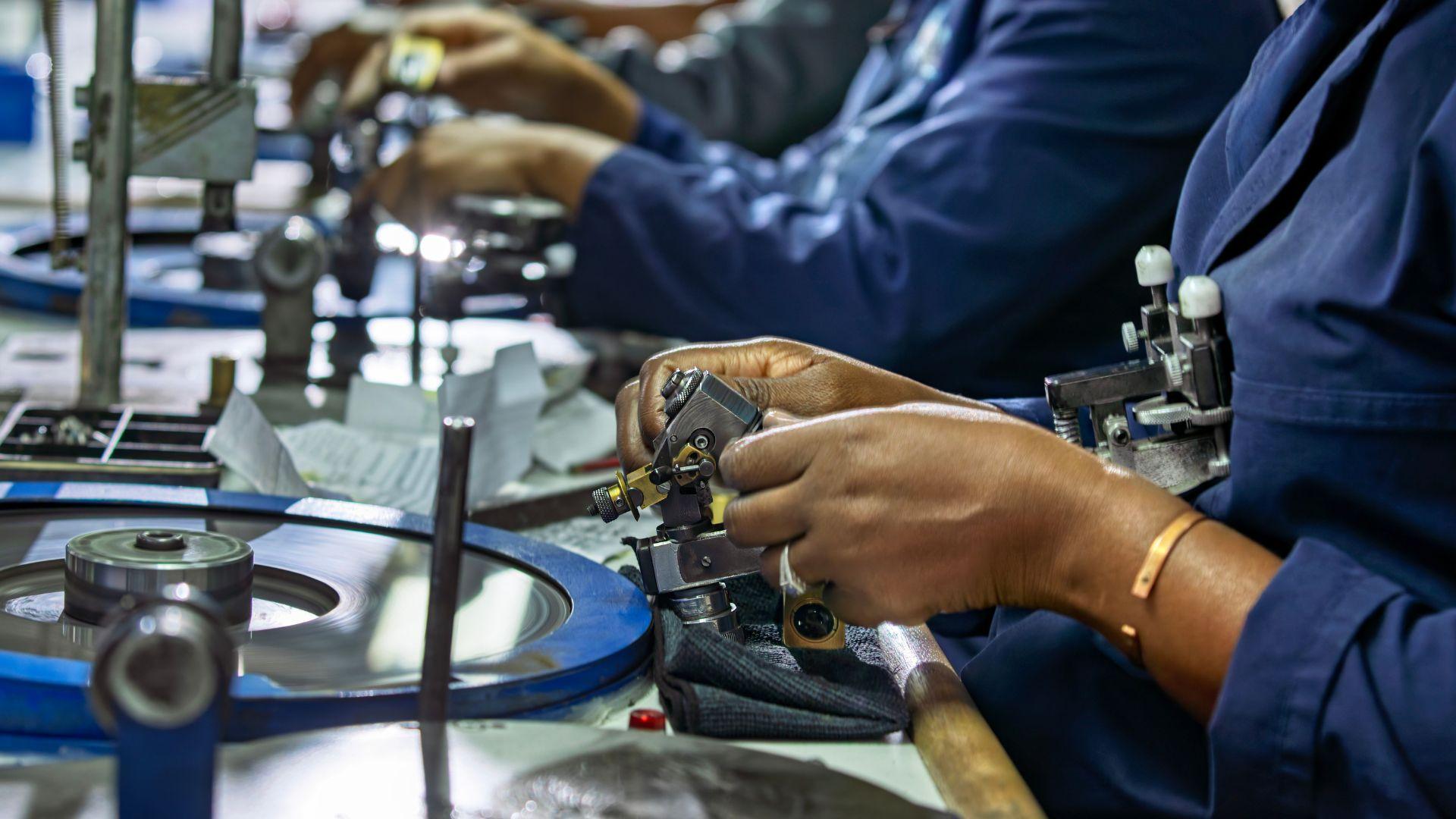
In recent years, India’s manufacturing ecosystem has shifted from labor-intensive production toward technology-enabled processes. Automation, robotics, artificial intelligence (AI), digital manufacturing platforms, and the Internet of Things (IoT) are increasingly integrated into production facilities. These advancements improve productivity, reduce waste, and enhance quality control.
Sustainability has also become central to industrial planning. Manufacturers are investing in renewable energy, energy-efficient operations, and waste-reduction technologies to align with environmental goals. Combined with government support and market demand, these developments are positioning India as a rapidly growing industrial hub.
Download Free Sample Report:https://www.renub.com/request-sample-page.php?gturl=india-manufacturing-market-p.php
Key Growth Drivers of the India Manufacturing Market
Government Initiatives and Policy Reforms
Strong government backing plays a foundational role in accelerating manufacturing expansion. Initiatives such as Make in India and Production-Linked Incentive (PLI) schemes promote domestic production, encourage technology adoption, and attract foreign investment. The development of industrial corridors, logistics parks, and Special Economic Zones (SEZs) further enhances operational efficiency.
In March 2025, the Ministry of Food Processing Industries approved 1,608 projects under Make in India, announced 100 new food-testing laboratories, and increased the FY 2024–25 allocation by 30.19%. These measures strengthen quality standards, boost supply chains, and generate employment opportunities.
Regulatory simplification and ease-of-doing-business reforms continue to attract multinational corporations seeking to expand or relocate production facilities.
Rising Domestic Demand
India’s growing middle class and rapid urbanization are significantly boosting domestic consumption. Demand for automobiles, electronics, packaged food products, pharmaceuticals, and home appliances continues to expand, encouraging manufacturers to increase production capacity.
In January 2025, Maruti Suzuki India Ltd announced plans to invest INR 35,000 crore in a second Gujarat plant, aiming to scale annual output to nearly 4 million vehicles by 2030–31. This investment underscores the strength of India’s consumer-driven manufacturing demand.
The rapid expansion of e-commerce platforms and organized retail networks further amplifies production requirements. Domestic demand remains a primary engine supporting long-term industrial growth.
Technological Adoption and Industry 4.0
India’s manufacturing competitiveness increasingly depends on technological modernization. Automation, robotics, AI analytics, IoT-enabled predictive maintenance, and digital supply chain systems enhance efficiency and reduce operational costs.
Advanced production technologies also improve quality control and reduce turnaround time. Sectors such as automotive, electronics, and pharmaceuticals are leading adopters of Industry 4.0 practices.
Digital transformation supports sustainability objectives by optimizing energy use and minimizing material waste. Manufacturers leveraging modern technologies are better equipped to compete in global markets and meet evolving consumer standards.
Challenges in the India Manufacturing Market
Skilled Labor Shortage
Despite India’s large workforce, a shortage of specialized technical skills poses challenges. Operating advanced machinery, robotics systems, and AI-based production tools requires expertise that is not uniformly available across regions.
Efforts are underway to bridge this gap through vocational training, reskilling initiatives, and industry-academia partnerships. However, accelerating workforce development remains essential for sustaining technological advancement.
Intense Global Competition
India competes with established manufacturing hubs such as China, Vietnam, Mexico, and Southeast Asian nations. These countries benefit from mature supply chains, strong export networks, and efficient production ecosystems.
To maintain competitiveness, Indian manufacturers must continuously enhance productivity, innovation, and quality standards. Strategic investments in infrastructure, logistics, and research & development are critical to expanding global market share.
State-Level Manufacturing Insights
Maharashtra Manufacturing Market
Maharashtra remains one of India’s most industrialized states. It hosts diverse industries including automobiles, chemicals, pharmaceuticals, textiles, and electronics. Cities such as Mumbai and Pune serve as major industrial centers supported by strong port connectivity and industrial corridors.
The state emphasizes digital manufacturing, automation, and innovation, making it a preferred destination for domestic and foreign investment.
Uttar Pradesh Manufacturing Market
Uttar Pradesh (UP) is emerging as a rapidly expanding manufacturing region. Key industries include textiles, leather, food processing, chemicals, and electronics. Industrial clusters, expressway connectivity, and investor-friendly policies are enhancing the state’s industrial footprint.
UP’s large labor pool and expanding logistics network strengthen its contribution to India’s manufacturing growth.
Andhra Pradesh Manufacturing Market
Andhra Pradesh is gaining prominence due to proactive industrial policies and strategic port access. Focus sectors include food processing, pharmaceuticals, automobiles, textiles, and electronics.
Investment incentives, SEZ development, renewable energy integration, and logistics infrastructure improvements are driving long-term manufacturing expansion in the state.
Recent Developments in India’s Manufacturing Ecosystem
In March 2025, Tata Electronics partnered with Himax Technologies and Powerchip Semiconductor Manufacturing Corporation to advance India’s display and ultra-low-power AI sensing ecosystem, strengthening domestic electronics manufacturing capabilities.
In February 2025, Tata Group began constructing a INR 27,000 crore OSAT (Outsourced Semiconductor Assembly and Test) facility in Jagiroad, Assam. The project is expected to generate around 27,000 jobs and significantly boost India’s semiconductor infrastructure.
These developments highlight India’s ambition to expand into high-value, technology-driven manufacturing segments.
India Manufacturing Market Segmentation
By Ownership
- Public Sector
- Private Sector
- Joint Sector
- Cooperative Sector
By End User
- Automotive & Auto Components
- Textile & Apparel
- Electronics & Electricals
- Food & Beverages
- Pharmaceuticals & Healthcare
- Construction Materials
- Chemicals
- Aerospace & Defence
- Metals
- Machinery & Capital Goods
- Others
By Plant Size
- Large Enterprises
- Medium Enterprises
- Small & Micro Enterprises (MSMEs)
By States
Maharashtra, Tamil Nadu, Karnataka, Gujarat, Uttar Pradesh, West Bengal, Rajasthan, Telangana, Andhra Pradesh, Madhya Pradesh.
Competitive Landscape
India’s manufacturing market includes leading corporate players across automotive, steel, FMCG, and heavy industries. Major companies include:
- Maruti Suzuki India Ltd
- Tata Motors Ltd
- Mahindra & Mahindra Ltd
- Godrej Group
- Ashok Leyland Ltd
- Hindustan Unilever Ltd
- Tata Steel Ltd
- Reliance Industries Ltd
- JSW Steel Ltd
Companies are analyzed based on company overview, leadership, strategic developments, SWOT analysis, and sales performance.
Final Thoughts
India’s manufacturing market is entering a defining decade of expansion and modernization. With projected growth from US$ 1.49 trillion in 2024 to US$ 2.92 trillion by 2033, the sector is poised to become a central pillar of the global industrial economy.
Government reforms, digital transformation, infrastructure expansion, and semiconductor investments are reinforcing industrial capacity. However, workforce upskilling and sustained innovation will be critical to maintaining momentum.
If India successfully aligns policy execution with technological advancement and human capital development, the nation will not only strengthen domestic economic resilience but also emerge as one of the world’s most influential manufacturing powerhouses.

 English
 French
 Spanish
 Portuguese
 Deutsch
 Turkish
 Dutch
Dutch
 Italiano
 Russian
 Romaian
 Portuguese (Brazil)
 Tiếng Việt