


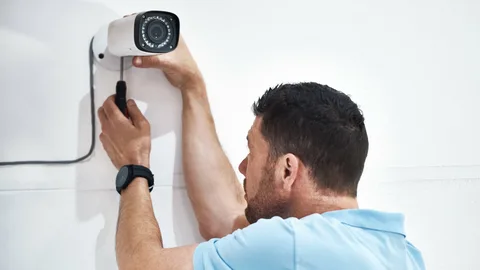
A professional security camera installation gives you more than video; it gives you usable evidence, operational alerts, privacy-aware retention, and a system that scales as needs change. Done poorly, cameras create endless false alarms, useless footage, and privacy headaches. Done right, security camera installation deters incidents, shrinks investigation time, and integrates with access control and alarms to improve situational awareness.
Start with clear objectives, not “more cameras”
The first step in any good security camera installation is defining what you want to achieve. Are you trying to deter package theft, capture license plates at the driveway, monitor a narrow corridor, or provide concierge-style entry verification? Each objective asks for different cameras, optics, and mounting heights. A security camera installation driven by clear objectives is efficient: it uses the right sensor in the right spot and avoids over-provisioning that makes footage unmanageable.
Match camera types and optics to the scene
Different scenes demand different optics. For broad context, a wide-angle dome provides situational awareness; for identity capture you need tighter FOV and higher resolution; for license plate capture you require narrow FOV, high frame rates, and IR. Low-light and backlight conditions require cameras with good dynamic range and true day/night switching. A quality security camera installation evaluates lighting through the day and night and chooses sensors and IR illumination that produce usable images in the worst-case conditions.
Lighting, HDR, and real usable images
Lighting is more important than camera resolution for usable video. During a professional security camera installation the team inspects expected sun angles, artificial light sources, and potential glare. Where lighting will be poor, options include active IR, supplemental warm white lighting on demand, or HDR sensors that preserve highlight and shadow detail. Installers design lighting and exposure so the camera captures identity-level detail when it’s needed most, without creating glare or blinding reflections.
Placement, sightlines, and reducing false positives
Placement determines effectiveness and false-alarm rate. A layered approach—context cameras plus identity cameras—works best: a wide camera detects motion and a second tighter camera captures details. Heights that are too low invite tampering; heights that are too high reduce facial detail. A professional security camera installation optimizes mount height and angle, avoids common false-trigger sources (moving foliage, busy streets), and tunes analytics to the scene so alerts are meaningful.
Network architecture, storage strategy, and privacy
Modern cameras are network endpoints. As part of installation, cameras are placed on a segmented VLAN with restricted egress and strong credentials. Storage strategy is chosen to match retention and privacy needs; options include on-site NVRs for local control, cloud for off-site redundancy, or hybrid models that store critical events off-site. Retention policies are documented: how long do you keep footage, who can access exports, and how are logs audited? These choices balance evidentiary needs with privacy obligations.
Analytics, AI and reducing operator fatigue
Analytics are powerful when tuned correctly. Object detection that distinguishes people from vehicles reduces nuisance alerts. Region-based masking prevents alerts where you don’t need them. A security camera installation includes careful tuning of analytics and creation of actionable rules—only send alerts that combine multiple triggers or that occur during specific windows. This reduces alert fatigue and makes operators respond to real incidents.
Integration with access control and alarms
Cameras become more useful when integrated with other systems. For instance, an unlocked gate event paired with a camera snapshot creates an actionable record, and door-forced alarms can automatically trigger recording and push clips to security staff. A professional security camera installation maps these integration points and ensures the data flows are secure and auditable.
Commissioning, verification and incident workflows
Commissioning validates that cameras produce usable video under real conditions. Technicians test night, day, and transitional lighting, verify recording and export workflows, tune analytics, and run retrieval tests so staff can quickly find the right clips. Security camera installation also includes establishing incident workflows: who receives alerts, how clips are shared, and how evidence is preserved for investigations or law enforcement.
Maintenance, firmware and lifecycle considerations
Cameras need attention: lens cleaning, firmware updates, mount checks, and storage health. Installers provide a maintenance schedule and often offer remote monitoring for device health. Firmware updates should be staged to a pilot group before broad deployment to avoid systemic issues. For long deployments, maintain a spare-parts inventory and documented replacement procedures to minimize downtime.
Privacy, signage and legal compliance
A responsible security camera installation respects neighbors’ privacy and local laws. Signage, privacy masking, and clearly defined retention policies are essential. Audio recording often has separate legal restrictions; if you plan to record sound, consult local regulations and obtain consent where needed. These steps reduce liability and foster community acceptance.
Choosing a provider and what to insist on
When selecting a vendor for security camera installation ask for a site survey, a camera coverage map, sample day/night images, a storage and retention plan, commissioning tests, and a maintenance proposal. Avoid vendors that provide vague coverage claims without on-site verification or that sell “more cameras” as the default fix.
Final Thoughts
A security camera installation is more than hardware; it is a project that combines optics, placement, analytics, network design, and careful privacy practices. When the system is designed and commissioned by professionals, it delivers usable evidence, reduces incidents, and integrates into broader security workflows without becoming a maintenance burden.

 English
 Arabic
 French
 Spanish
 Portuguese
 Turkish
 Dutch
Dutch
 Italiano
 Russian
 Romaian
 Portuguese (Brazil)
 Tiếng Việt