


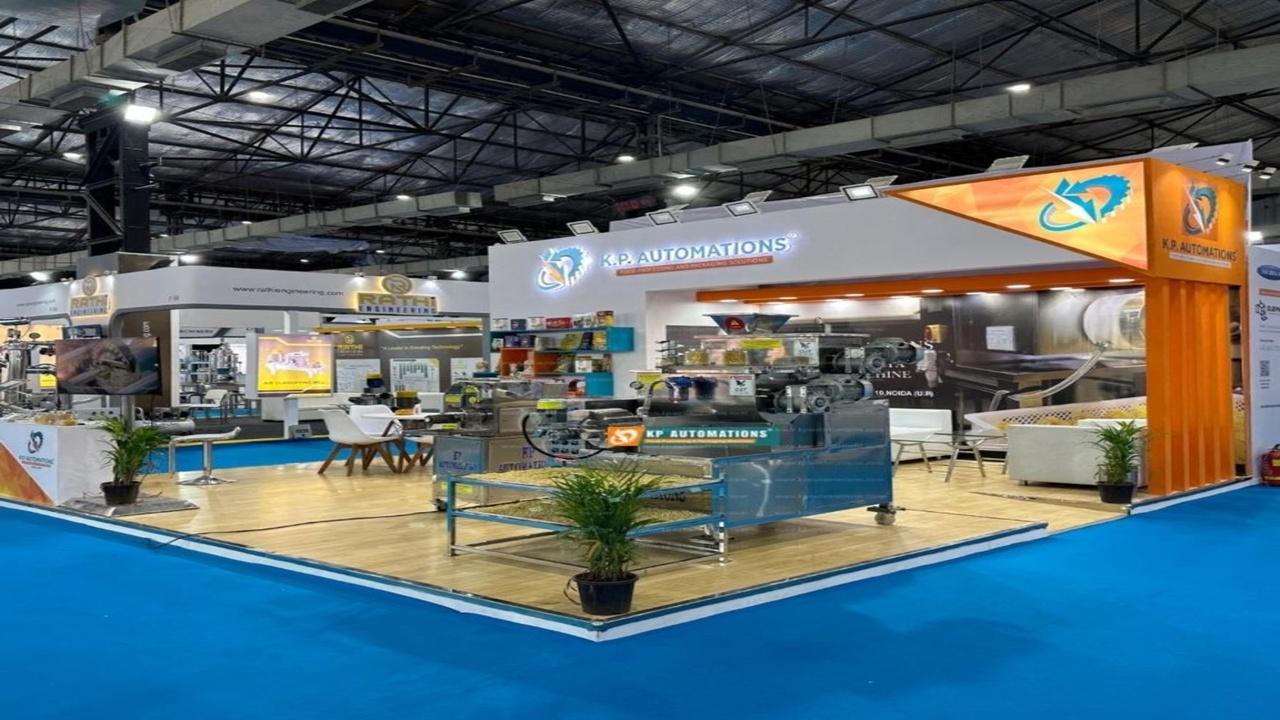
KP Automations Pasta Machines: Why Pressure Stability Is the Backbone of Consistent Industrial Pasta Production
Sometimes the Real Issue Is Pressure, Not Speed
When output quality starts changing, many people first look at machine speed.
Fair enough.
But honestly, in industrial pasta machines, pressure stability often matters even more than speed.
Because the entire process — especially extrusion — depends on maintaining controlled internal pressure.
If that pressure keeps fluctuating, product consistency starts slipping.
And once that happens, shape, texture, and drying performance all begin to change.
That’s why pressure control quietly sits at the center of the whole production line.
What Pressure Stability Actually Means
Let’s keep it simple.
Pressure stability means maintaining a steady internal force as dough moves through the machine.
This applies especially to the feed chamber, screw section, and die exit.
In industrial pasta machines, stable pressure helps the dough flow uniformly.
You’ll notice what stands out is repeatability.
The same input should create the same output, batch after batch.
It Starts from Dough Feed Consistency
Before we even reach extrusion, feed consistency matters.
If the dough enters unevenly, internal pressure changes automatically.
A sudden high feed creates excess load.
A reduced feed lowers internal force.
That creates unstable product flow.
So honestly, pressure stability starts right from the feeding section.
Why It Matters in the Pasta Extrusion Machine
Now let’s talk about the core section.
The pasta extrusion machine relies heavily on balanced pressure to push dough through the die.
If pressure drops, the product may come out thinner or softer.
If pressure spikes, the product may become denser or slightly distorted.
In industrial pasta machines, stable extrusion pressure directly improves shape accuracy.
This is one of the biggest quality-control points in the line.
Better Shape and Surface Consistency
Here’s something practical.
Pressure fluctuations often show up as visible quality differences.
Some pieces may look slightly thicker.
Others may show surface irregularities.
Even if the variation is small, it becomes noticeable in bulk production.
Stable pressure helps maintain a cleaner and more uniform finish.
Die Performance Depends on Stable Pressure
The die section especially depends on this.
Pressure should remain balanced as dough passes through the die openings.
If force changes constantly, edge definition suffers.
That affects final shape precision.
And honestly, for commercial pasta production, that consistency really matters.
Drying Stage Also Feels the Impact
Now move to drying.
The pasta drying system performs better when the incoming product has uniform density and thickness.
Pressure instability in extrusion creates variation in structure.
Industrial pasta dryer systems then struggle to remove moisture evenly.
That may lead to cracking, weak texture, or inconsistent shelf life.
So yes, pressure control directly affects downstream quality too.
Smoother Flow Across the Pasta Production Line
In a full pasta production line, stable pressure improves movement across every stage.
Less pile-up.
Better spacing.
More predictable drying load.
Smoother packing feed.
Simple process control, full-line benefit.
Packaging Performance Improves Too
Even the pasta packing machine benefits.
Uniform product dimensions make weighing and filling more accurate.
That reduces packaging rejection and helps maintain speed.
So honestly, the benefits continue till the final stage.
Real Factory Situation: Operator Setting Variations
Let’s be real.
In industrial zones like G.B D-372, D Block, Sector 10, Noida, Uttar Pradesh 201301, different shifts may use slightly different machine settings.
That often changes internal pressure behavior.
Standardized pressure settings help maintain consistency.
And if technical support is required, teams are usually reachable at +91 9310738142 or kpautomations372@gmail.com.
Better Output with Less Waste
This is where it becomes commercially important.
Stable pressure reduces product rejection.
Less shape variation.
Less cracking.
Less rework.
And honestly, that directly improves usable daily output.
Choosing Machines with Better Pressure Control
If you’re planning to invest, don’t just compare pasta making machine price.
Check how well the system manages feed pressure, screw control, and die resistance.
Some industrial pasta making machine setups offer better sensors and automated load balancing.
That makes stable production much easier.
Where the Industry Is Heading
Modern automatic pasta making machine systems are moving toward real-time pressure monitoring.
Sensors, PLC controls, and predictive load adjustments are becoming more common.
Not every plant uses it yet.
But honestly, this is clearly the direction the industry is moving.
Final Thoughts
Pressure stability may sound like a technical detail, but in industrial pasta machines, it directly defines product quality and production efficiency.
From extrusion accuracy to drying consistency and final packaging, its effect is everywhere.
If you’re running or planning a production line, this is definitely something worth focusing on.
Because sometimes the difference between average output and excellent output is simply stable pressure.

 English
 Arabic
 French
 Spanish
 Portuguese
 Deutsch
 Turkish
 Dutch
Dutch
 Italiano
 Russian
 Romaian
 Portuguese (Brazil)